Spring Plumbing Maintenance Checklist: 7 Critical Tasks Every Homeowner Should Complete
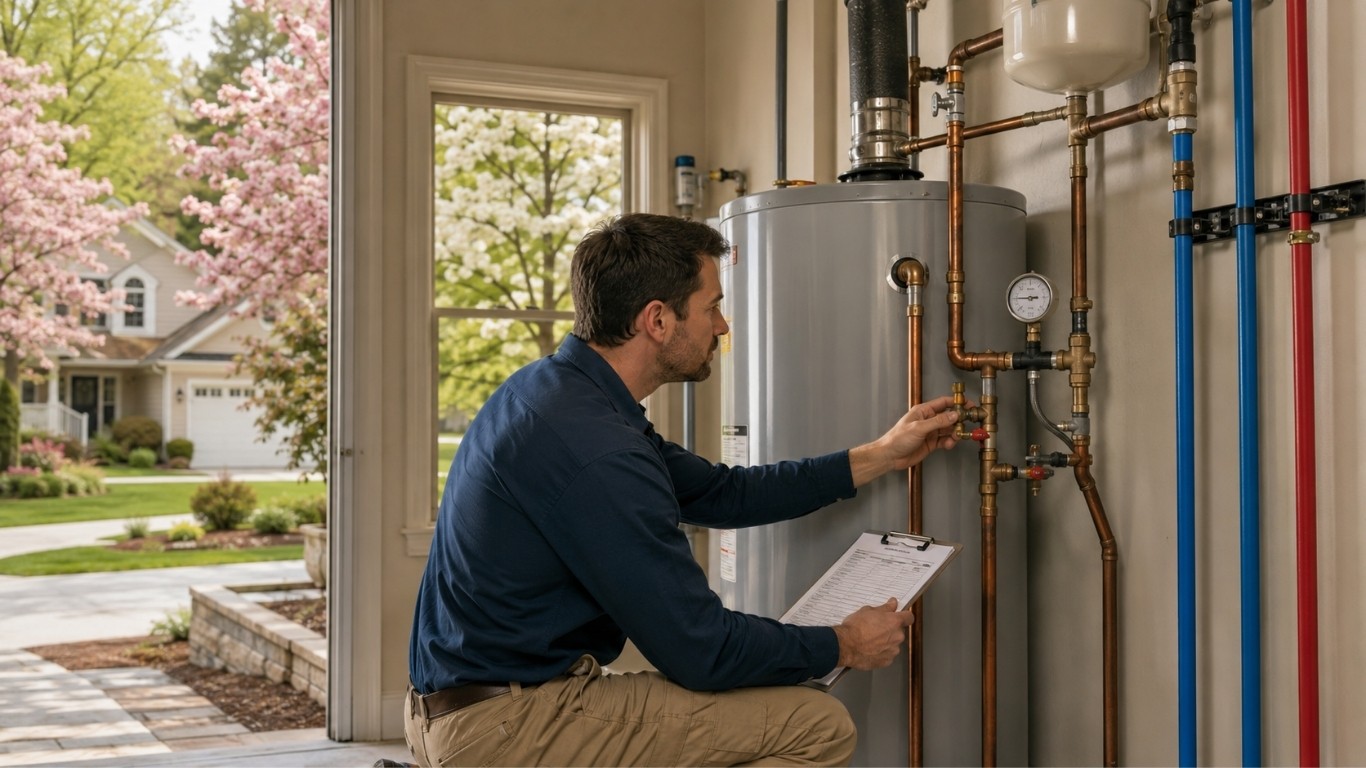
Winter in North Georgia is deceptively rough on residential plumbing. Between the freeze-thaw cycles that hit Cobb County every January, the heavy rains that follow in March, and the spring storms that roll across Marietta in April, your home's plumbing spends months under stress you never see. By the time the dogwoods bloom, small issues have a way of turning into expensive emergencies.
The good news: a few focused hours of spring maintenance can prevent most of them. Here are the seven tasks every Marietta homeowner should knock out before summer heat sets in.
1. Inspect Every Visible Pipe for Leaks
Grab a flashlight and walk your home. Look under every sink, around the base of every toilet, behind your washing machine, and around your water heater. In Marietta basements and crawl spaces, watch for green corrosion on copper, white mineral staining around joints, soft drywall, and unexplained condensation rings on pipes.
Cobb County's red clay shifts after wet winters, which puts stress on pipe joints from the outside as well as the inside. Catching a pinhole leak now costs a few dollars in fittings. Missing one until June can mean replacing flooring, drywall, and framing.
2. Test Outdoor Faucets and Hose Bibs
Turn each outdoor faucet on full. Press your thumb tightly over the spout. If water still streams against your thumb, the valve is closing properly. If it stops or trickles, the supply pipe inside your wall has likely burst from a winter freeze and is leaking somewhere you can't see.
Marietta homes are especially vulnerable to this because our freezes are sudden and short. Homeowners rarely disconnect hoses before that first January cold snap, and the damage doesn't reveal itself until spring.
3. Verify Your Sump Pump Is Spring-Ready
Pour five gallons of water into the sump pit. The pump should activate within seconds, evacuate the water, and shut off cleanly. If it hesitates, runs continuously after the pit empties, or makes grinding or rattling noises, the unit needs attention before storm season. Schedule pump system repair before a Cobb County downpour does the diagnostic for you.
Don't skip the battery backup. Spring thunderstorms knock out power across Marietta several times each year, and the pump that needs to work hardest is the one running during an outage.
4. Schedule a Professional Drain Cleaning
Holiday cooking grease, hair, soap scum, and the leaf debris that washed into your exterior drains over winter all accumulate in the same place: the inside walls of your pipes. Once summer heat compounds the buildup, you get the slow drains, gurgling noises, and sewer odors that lead to emergency calls.
Tree roots are the other half of the problem in older Marietta neighborhoods. Mature oaks and sweetgums send fine roots toward any moisture source, and warming soil in March and April accelerates their growth. A preventive RootX treatment or high-pressure jetting appointment clears the lines before the lines clear themselves into your basement.
5. Check Your Water Pressure
A pressure gauge that screws onto any outdoor faucet costs around ten dollars at any Marietta hardware store. Healthy residential water pressure sits between 40 and 60 psi.
Above 80 psi, you are silently wearing out every fixture, supply line, and valve in the house. Below 40 psi, you likely have buildup in the lines, a partially closed valve somewhere, or a failing pressure regulator. Either extreme is worth correcting now rather than when a washer hose fails at 3 a.m.
6. Service Your Water Heater
Marietta water is moderately hard. Every gallon that flows into your tank carries dissolved minerals, and those minerals settle on the floor of the tank as sediment. Sediment insulates the heating element from the water, forces longer heat cycles, and corrodes the bottom of the tank from the inside out. Annual flushing is the single biggest reason some tanks last 12 years and others fail at six.
Drain a few gallons from the bottom of your tank through the drain valve until the water runs clear. While you are there, check the temperature setting (120 F is the sweet spot for most homes) and listen for the popping sound that signals a heavy sediment layer. If you hear it, schedule a professional service or consider a new water heater installation. For background on why some tanks fail early, our team wrote a full explanation in Why Your Marietta Home's Water Heater Isn't Lasting As Long As It Should.
7. Reverse Winter Insulation Where It No Longer Helps
Pipe insulation that protected your lines in January can trap moisture in May. Inspect any wrap on exterior or crawl-space pipes. Wet, sagging, or moldy insulation is doing more harm than good and should be removed and replaced. While you are at it, check that your main water shut-off valve still turns smoothly. Every Marietta homeowner should know exactly where that valve is before an emergency forces a search.
Marietta-Specific Issues to Watch For
Older neighborhoods around the Marietta Square, parts of east Cobb, and homes near Sope Creek tend to share three traits worth knowing about. First, soil with a high water table that puts more pressure on foundation drains. Second, mature tree canopies that aggressively infiltrate sewer laterals. Third, original cast-iron drain stacks that are now in their failure window. If your home checks any of those boxes, a video camera inspection of the main line every three to five years is the cheapest insurance you can buy.
Newer subdivisions in west Cobb, Powder Springs, and Acworth have different concerns. PVC drains, PEX supply lines, and tankless water heaters dominate. The issues there are usually pressure-related (regulator failures and hammer-arrestor wear) or installation defects that took a few years to reveal themselves.
Roughly How Long Each Task Should Take
• Visual pipe inspection: 30 to 45 minutes for an average home.
• Outdoor faucet test: 5 minutes per faucet.
• Sump pump test: 15 minutes including refilling and listening to two full cycles.
• Water pressure check: 10 minutes once you have a gauge.
• Water heater flush: 30 to 60 minutes depending on sediment levels.
A complete spring checklist for a typical Marietta home takes a Saturday morning. The return on those few hours is years of additional service life from every major plumbing component.
Quick Answers to Common Spring Plumbing Questions
How often should I flush my water heater? Once a year is the right cadence for most Marietta homes, with an anode rod inspection every three years.
Do I really need to inspect outdoor faucets if I drained them in fall? Yes. Freeze damage often happens silently inside the wall, and the only way to confirm the supply pipe is intact is the thumb-over-the-spout pressure test.
What is the single most important spring task? Confirming your main shut-off valve actually works. Every other repair becomes manageable when you can stop the water quickly.
When Spring Maintenance Turns Up a Bigger Problem
If your checklist surfaces something you would rather not tackle yourself, that is exactly what we are here for. Rooter King handles spring inspections, repairs, and full system tune-ups across Marietta, Kennesaw, Smyrna, and the rest of Cobb County. Our annual service agreement covers proactive maintenance year-round so the small problems never become large ones. Reach out anytime through our contact page or call for the next available slot.